|
Juli Månad, i Nådens
år 2023
|
|
"Men vaken alltjämt, och
bedjen att I mån kunna undfly allt detta som skall komma,
och kunna bestå inför Människosonen." (Luk.
21:36) |
Änglar och UFO, del 68
Tempelskatten
1. Om dess öden och förflyttningar genom
århundradena efter år 70 e.Kr.
Inledning
 Den
här artikeln består mestadels av citat från antika
och äldre källor, på engelska, men i slutet av
artikeln kommer några konklusioner och reflektioner, på
svenska.
Den
här artikeln består mestadels av citat från antika
och äldre källor, på engelska, men i slutet av
artikeln kommer några konklusioner och reflektioner, på
svenska.
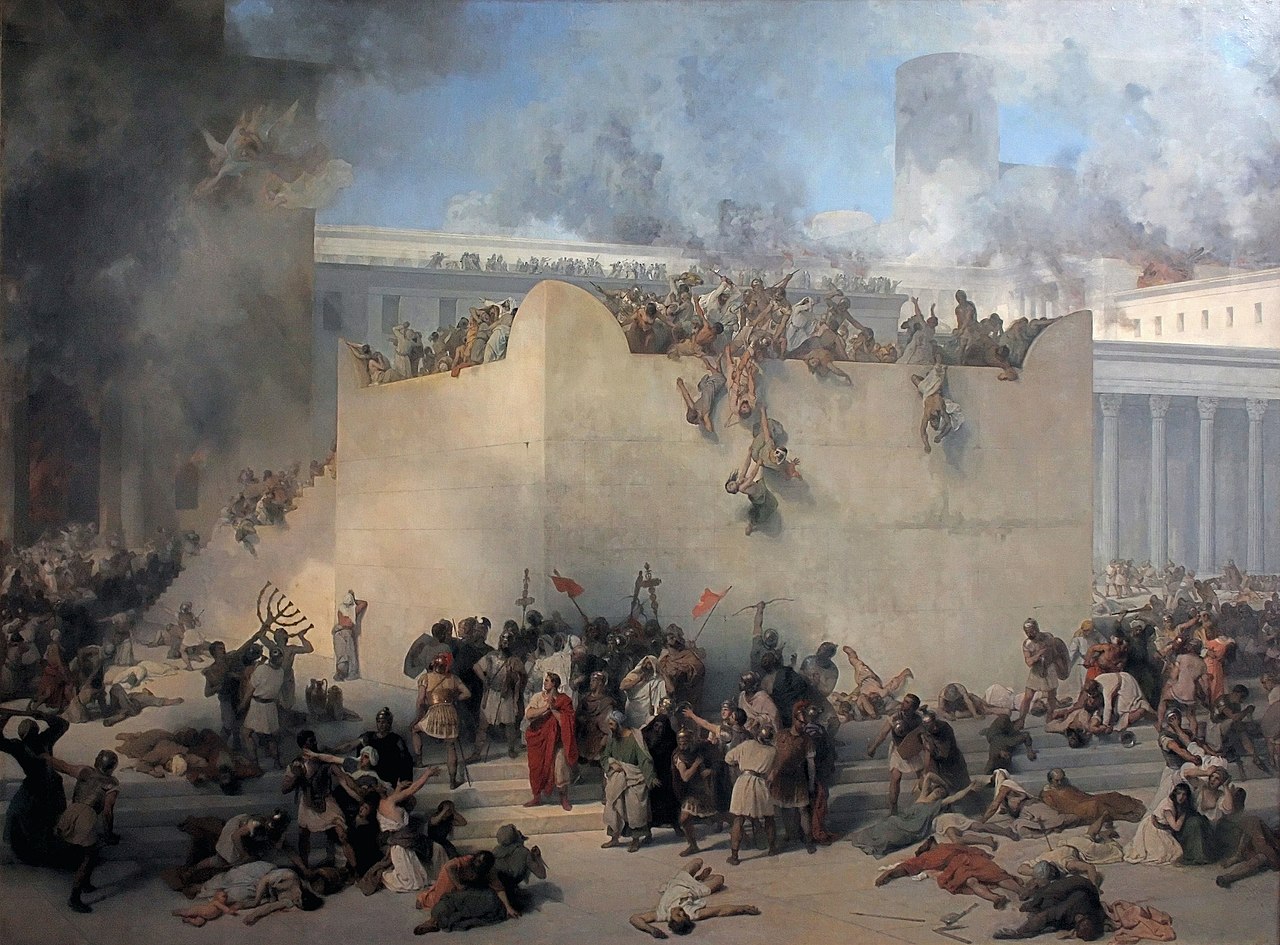
Artikeln handlar om vad som hände med den tempelskatt
som fördes bort från Jerusalem av romarna vid templets
förstörelse, och det går att följa dess färd
och öden ganska säkert genom århundradena. Särskilt
intressant är den sjuarmade ljusstaken, Menoran, då
den som framgår i Uppenbarelseboken har en profetisk effekt,
som vi också skall se den ha i de citerade texterna.
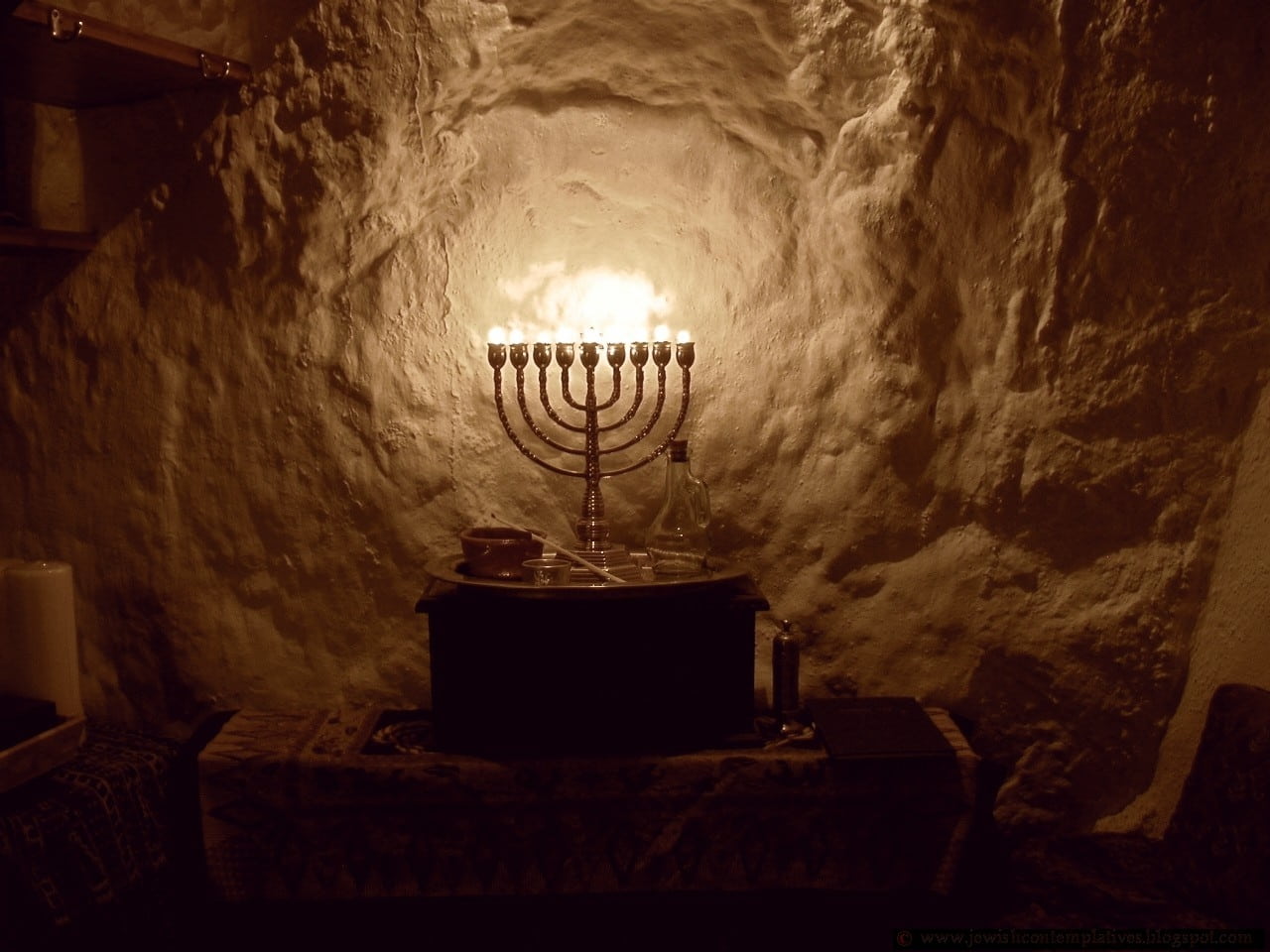
"Betänk
då varifrån du har fallit, och bättra dig, och
gör åter sådana gärningar som du gjorde
under din första tid. Varom icke, så skall jag komma
över dig och skall flytta din ljusstake från dess plats,
såframt du icke gör bättring." (Upp. 2:5)
Konklusionen till sist blir ganska eller rentav mycket fascinerande,
men mer skall jag inte avslöja nu, utan den intresserade
och kunskapshungrige lärjungen till Jesus får läsa
och insupa det andliga innehållet, och förhoppningsvis
bli motsvarande fascinerad, och förundrad, över Guds
verk i historien.
___
Vad hände med tempelskatten?
 Tempelskatten,
rövad från Jerusalem år 70, av Titus, fördes
först till Rom, där den förvarades och visades,
bl.a i "Fredens Tempel", tills Alarik och Visigoterna
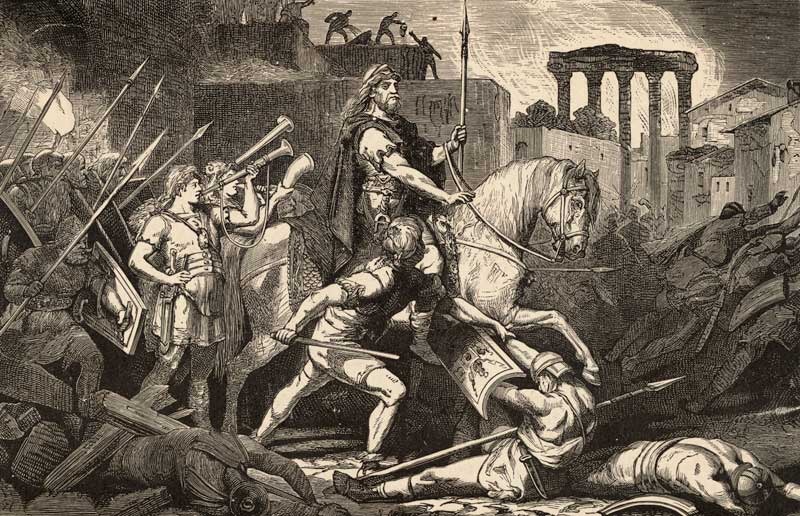
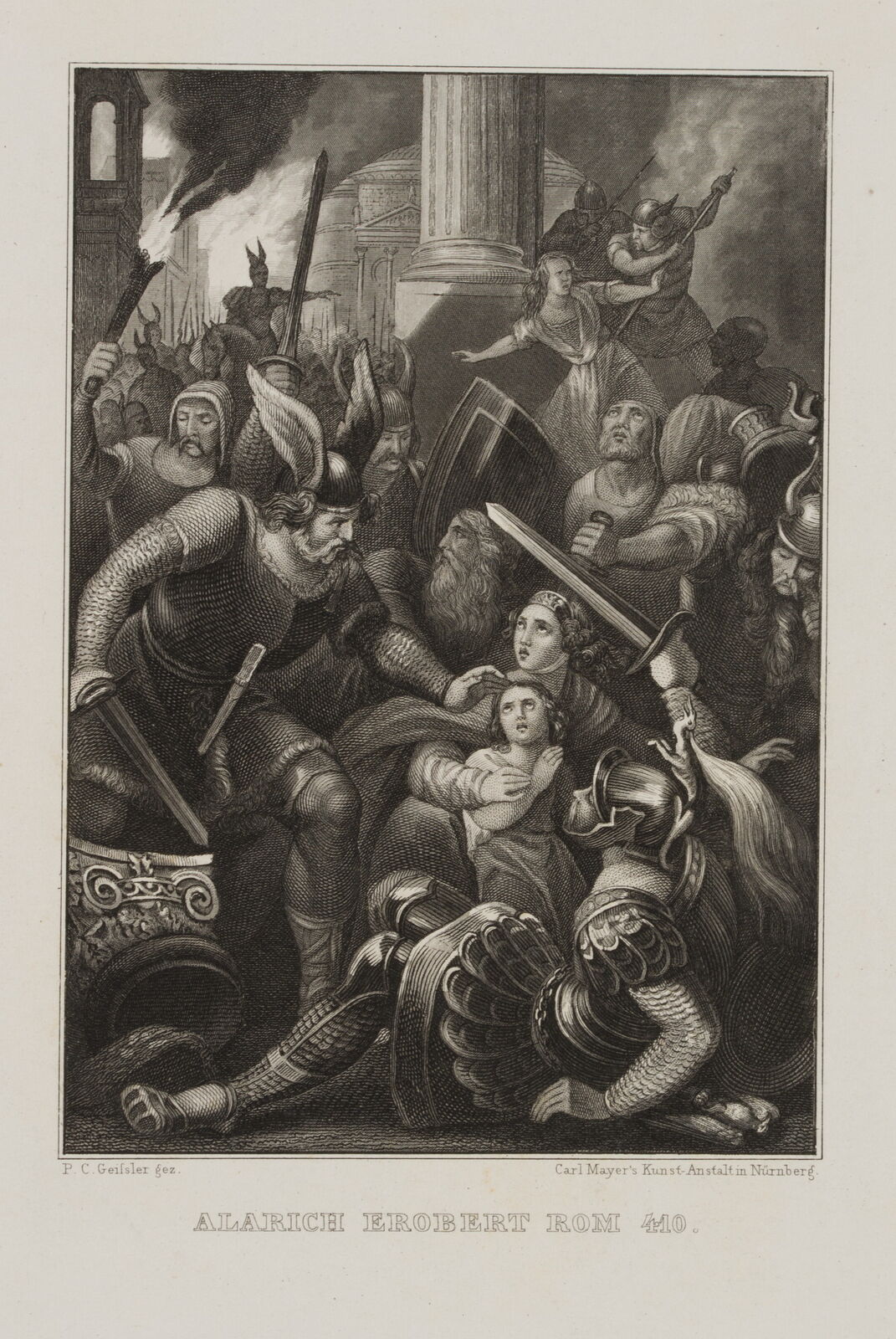
tog skatten med sig när de förstört Rom (delvis).
Jordanes skriver om detta, och hur goterna begravde Alarik i en
flod, tillsammans med (delar av?) skatten. Sedan skriver Prokopius,
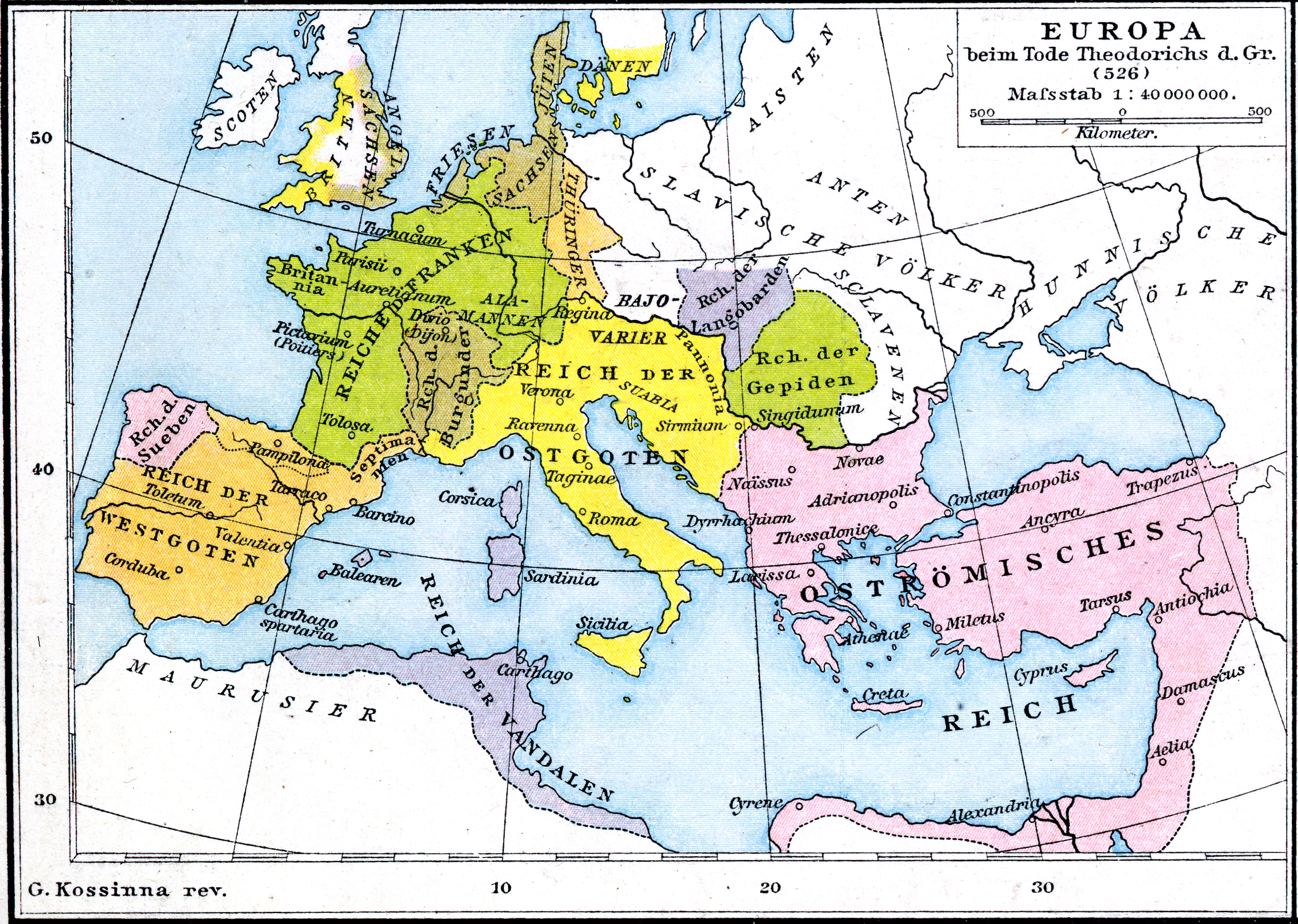
att goterna hade med sig av denna skatt till Carcassonnes i Frankrike
(dvs det som senare blev Frankrike men då var visigoternas
rike). Senare skall frankerna ha försökt ta skatten
men misslyckats, men morerna kan ha fått med sig en del
enligt en uppgift från Damaskus, Teoderik nämns också
som en av dem som tog hand om skatten och skall ha fört den
till Ravenna. Tempelriddare skall ha varit på platsen i
Frankrike och letat efter denna skatt.
Tempelskatten,
rövad från Jerusalem år 70, av Titus, fördes
först till Rom, där den förvarades och visades,
bl.a i "Fredens Tempel", tills Alarik och Visigoterna
tog skatten med sig när de förstört Rom (delvis).
Jordanes skriver om detta, och hur goterna begravde Alarik i en
flod, tillsammans med (delar av?) skatten. Sedan skriver Prokopius,
att goterna hade med sig av denna skatt till Carcassonnes i Frankrike
(dvs det som senare blev Frankrike men då var visigoternas
rike). Senare skall frankerna ha försökt ta skatten
men misslyckats, men morerna kan ha fått med sig en del
enligt en uppgift från Damaskus, Teoderik nämns också
som en av dem som tog hand om skatten och skall ha fört den
till Ravenna. Tempelriddare skall ha varit på platsen i
Frankrike och letat efter denna skatt.
___
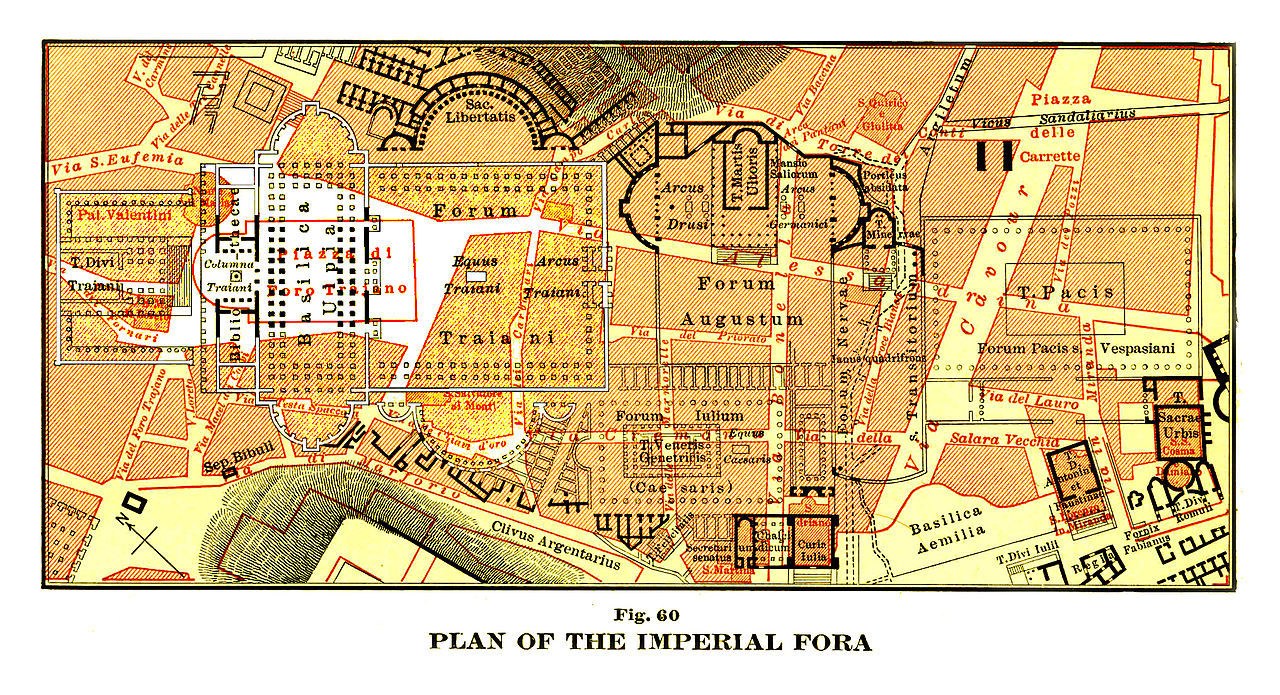
From Samuel Ball Platner, A Topographical
Dictionary of Ancient Rome, rev. Thomas Ashby. Oxford: 1929, p.
386-388.
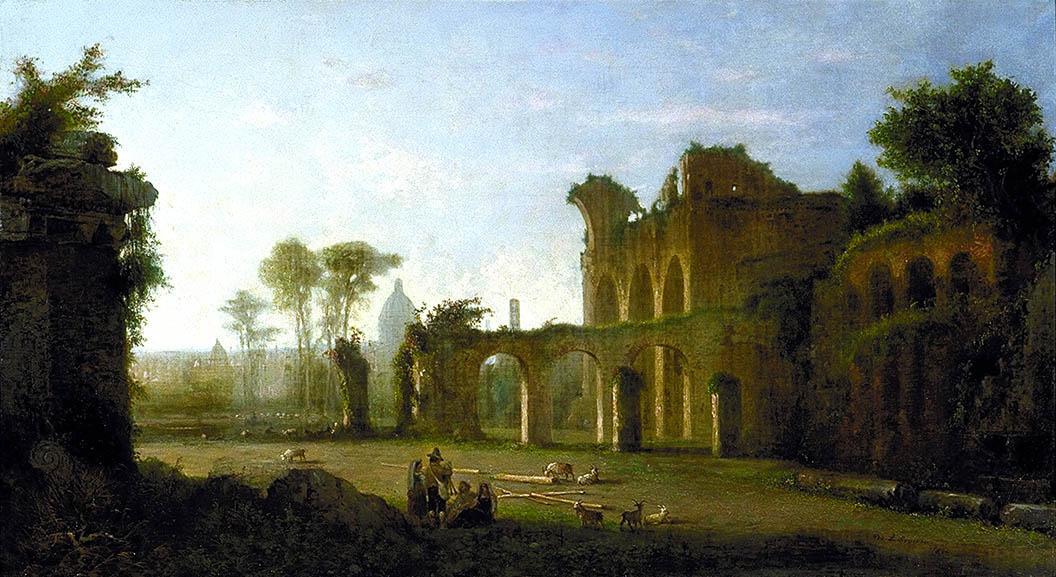
George Loring Brown - View of the Temple
of Peace in the Roman Forum (1864).
Fredens Tempel låg i förgrunden av bilden. På
skissen här bredvid syns templet till höger (T. Pacis).
The
temple of Peace which was begun by Vespasian after the capture
of Jerusalem in 71 A.D., and dedicated in 75 (Suet. Vesp. 9; Joseph.
b. Iud. VII.5.7 (158); Cass. Dio LXV.15.1; Aur. Vict. Caes. 9.7;
Ep. 9.8). It stood in the middle of the forum Pacis, north of
the basilica Aemilia (Mart. I.2.8), probably at the junction of
the modern Vie Alessandrina and dei Pozzi. Statius seems to ascribe
the completion of this temple to Domitian (Silv. IV.3.17; cf.
IV.1.13), but this emperor's claim may have had little foundation
(cf. Suet. Dom. 5). Within the temple, or attached closely to
it, was a library, bibliotheca Pacis (Gell. V.21.9; XVI.8.2; Boyd,
16-17, 36-37). In it were placed many of the treasures brought
by Vespasian from Jerusalem, as well as famous works of Greek
artists (Joseph. b. Iud. VII.5.7; Plin. NH XII.94; XXXIV.84; XXXV.102,
109; XXXVI.27, 58; Paus. VI.9.3; Iuv. IX.23; Hephaest. ap. Phot.
Bibl. 149 32 Bekk.), and Pliny (NH XXXVI.102) speaks of it, the
basilica Aemilia and the forum of Augustus, as the three most
beautiful monuments in Rome.
Just
before the death of Commodus, probably in 191, the temple was
destroyed by fire (Cass. Dio LXXII.24.1; Galen, de comp. med.
I.1), but it must have been restored, probably by Severus, for
it is mentioned in the succeeding centuries as one of the most
magnificent buildings in the city (Herod. I.14.2; Amm. Marcell.
XVI.10.14; Hist. Aug. trig. tyr. 31.10). It gave its name to the
fourth region of the city (Not. Reg. IV). In 408 there were seismic
disturbances for seven successive days in the forum Pacis (Marcell.
Comes, Chron. min. ed. Mommsen II.69: in foro Pacis per dies septem
terra mugitum dedit), and the temple may have been injured then.
At any rate Procopius (BG IV.21), writing in the sixth century,
says that it had long since been destroyed by lightning, although
there were still many works of art set up in the immediate vicinity.
___
Kommentar: Att lägga märke till här, är
att två år före Alariks angrepp på Rom,
skakades Fredens Tempel av jordbävningar 7 dagar i rad.
Från Jordanes Getica, slutet
av kap. XXX. Året är 410 eKr:
When
they finally entered Rome, by Alaric's express command they merely
sacked it and did not set the city on fire, as wild peoples usually
do, nor did they permit serious damage to be done to the holy
places. Thence they departed to bring like ruin upon Campania
and Lucania, and then came to Bruttii. Here they remained a long
time and planned to go to Sicily and thence to the countries of
Africa. Now the land of the Bruttii is at the extreme southern
bound of Italy , and a corner of it marks the beginning of the
Apennine mountains. It stretches out like a tongue into the Adriatic
Sea and separates it from the Tyrrhenian waters. It chanced to
receive its name in ancient times from a Queen Bruttia.
To
this place came Alaric, king of the Visigoths, with the wealth
of all Italy which he had taken as spoil, and from there, as we
have said, he intended to cross over by way of Sicily to the quiet
land of Africa. But since man is not free to do anything he wishes
without the will of God, that dread strait sunk several of his
ships and threw all into confusion. Alaric was cast down by
his reverse and, while deliberating what he should do, was suddenly
overtaken by an untimely death and departed from human cares.
His people mourned for him with the utmost affection. Then turning
from its course the river Busentus near the city of Consentia—for
this stream flows with its wholesome waters from the foot of a
mountain near that city—they led a band of captives into
the midst of its bed to dig out a place for his grave.
In the
depths of this pit they buried Alaric, together with many treasures,
and then turned the waters back into their channel. And that none
might ever know the place, they put to death all the diggers.
They bestowed the kingdom of the Visigoths on Athavulf his kinsman,
a a man of imposing beauty and great spirit; for though not tall
of stature, he was distinguished for beauty of face and form.
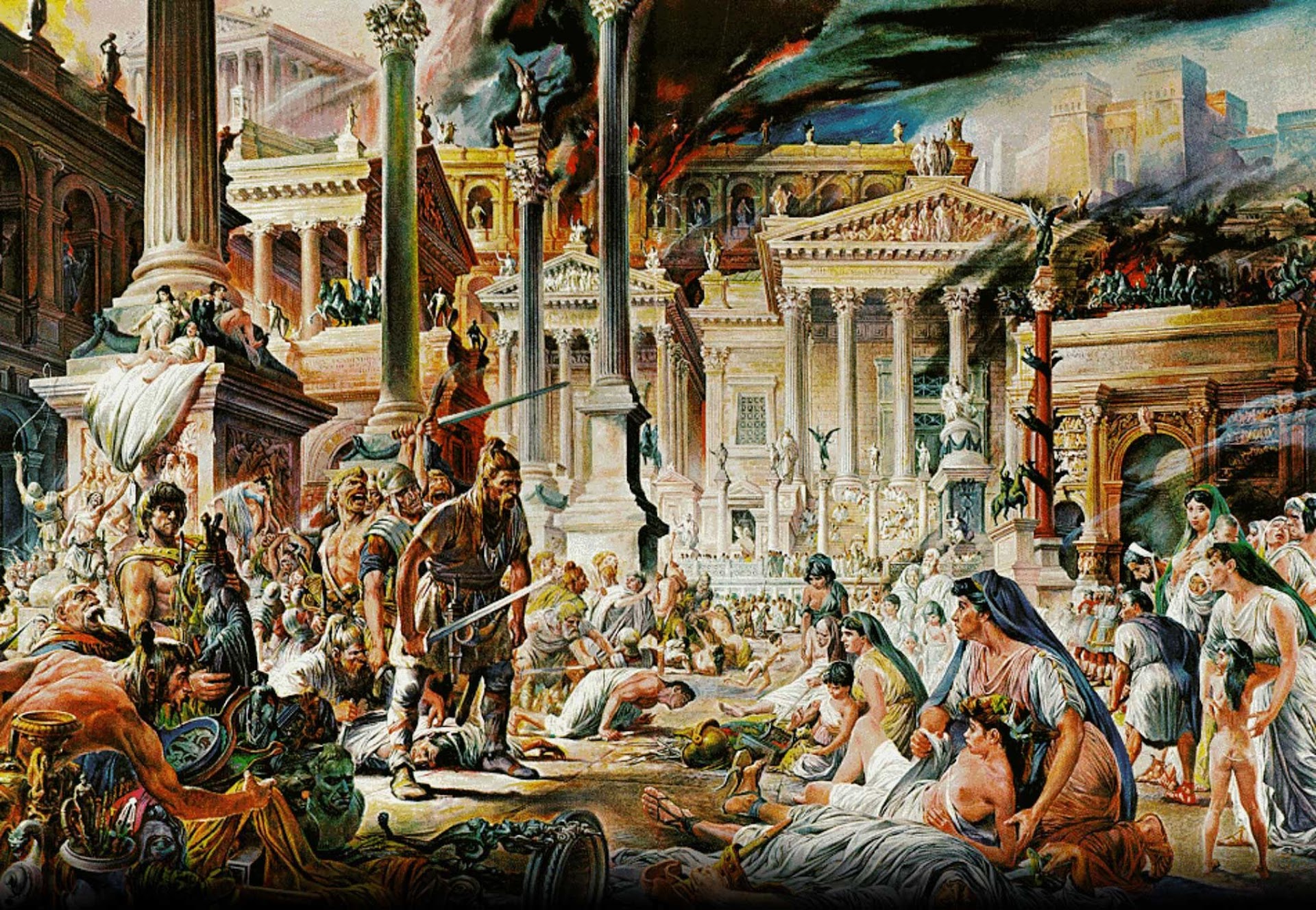
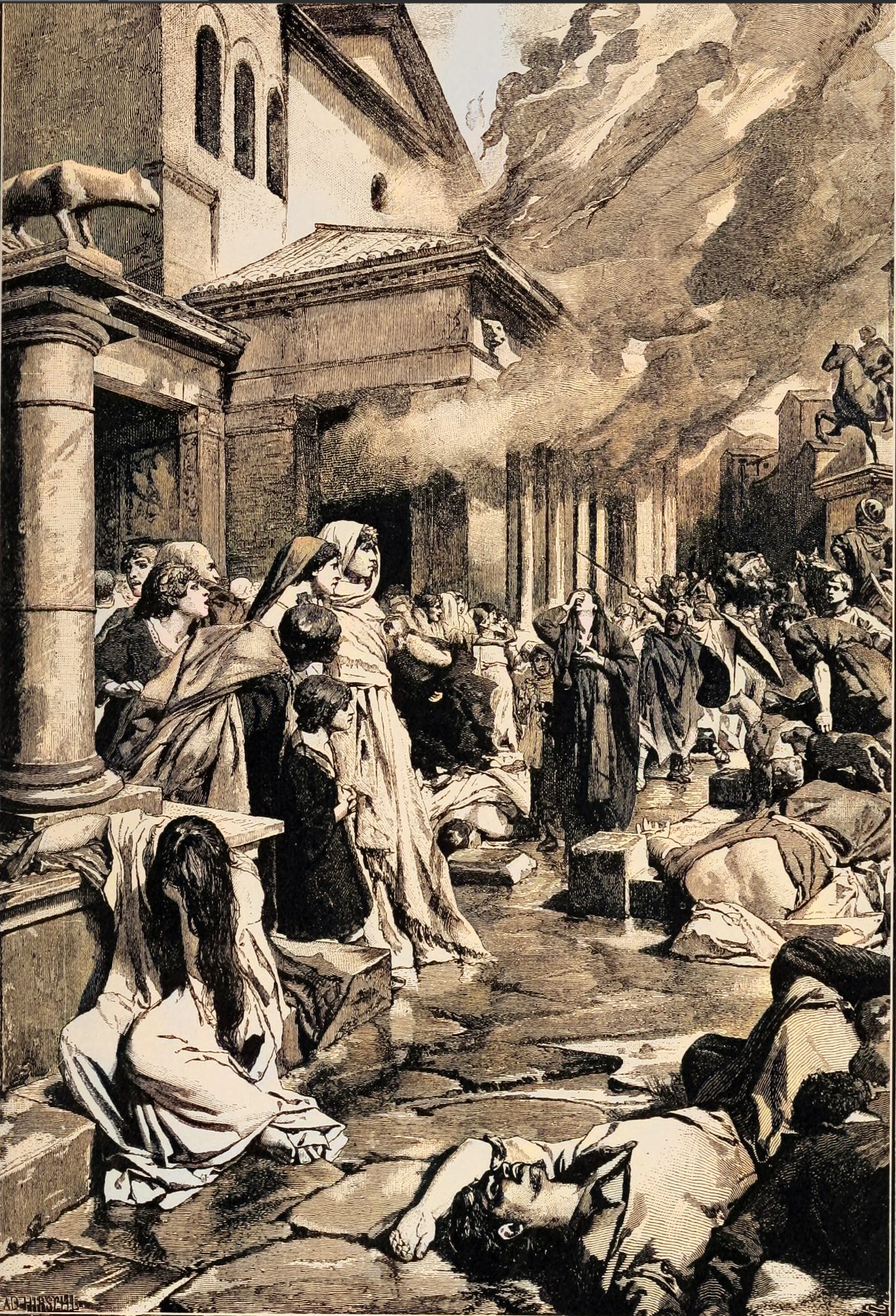
The Sack of Rome, av Andre Durenceao (National
Geographic).
XXXI
When Athavulf became king, he
returned again to Rome, and whatever had escaped the first sack
his Goths stripped bare like locusts, not merely despoiling Italy
of its private wealth, but even of its public resources. The
Emperor Honorius was powerless to resist even when his sister
Placidia, the daughter of the Emperor Theodosius by his second
wife, was led away captive from the city. But Athavulf was attracted
by her nobility, beauty and chaste purity, and so he took her
to wife in lawful marriage at Forum Julii, a city of Aemilia.
When the barbarians learned of this alliance, they were the more
effectually terrified, since the Empire and the Goths now seemed
to be made one.
Then Athavulf set out for Gaul, leaving
Honorius Augustus stripped of his wealth, to be sure, yet pleased
at heart because he was now a sort of kinsman of his.
___
"Though not tall of stature..." Det här tyder
på att Visigoterna eller i alla fall dera kungar kan ha
varit halvjättar, och i så fall på ena eller
andra förfaderssidan ättlingar till de verkliga jättarna.
I Heimskringla framgår det att Ynglingaätten ofta gifte
sig med de nordiska jättinnorna, så om goternas förfäder,
som troligen var av samma ätt eller nära besläktade,
också gjorde det, vid tillfälle, kan de alltså
ha varit kanske 7 fot vid den här tiden.
Burgunderna i det som skulle bli östra Frankrike, också
nära släkt med goterna och utvandrade från Bornholm,
omvittnas av en romersk historieskrivare, ha varit 7 fot långa
(och deras rapningar öronbedövande).
___
(Fetstilen i texten ovan liksom i det följande är
inlagd av mig för förtydligande.)
Från Prokopius Wars, bok 3,
kap. II:
But
I shall now tell how Alaric captured Rome.
After much time had been spent by him in the siege, and he
had not been able either by force or by any other device to capture
the place, he formed the following plan. Among the youths in the
army whose beards had not yet grown, but who had just come of
age, he chose out three hundred whom he knew to be of good birth
and possessed of valour beyond their years, and told them secretly
that he was about to make a present of them to certain of the
patricians in Rome, pretending that they were slaves. And he instructed
them that, as soon as they got inside the houses of those men,
they should display much gentleness and moderation and serve them
eagerly in whatever tasks should be laid upon them by their owners;
and he further directed them that not long afterwards, on an appointed
day at about midday, when all those who were to be their masters
would most likely be already asleep after their meal, they should
all come to the gate called Salarian and with a sudden rush kill
the guards, who would have no previous knowledge of the plot,
and open the gates as quickly as possible. After giving these
orders to the youths, Alaric straightway sent ambassadors to the
members of the senate, stating that he admired them for their
loyalty toward their emperor, and that he would trouble them no
longer, because of their valour and faithfulness, with which it
was plain that they were endowed to a remarkable degree, and in
order that tokens of himself might be preserved among men both
noble and brave, he wished to present each one of them with some
domestics. After making this declaration and sending the youths
not long afterwards, he commanded the barbarians to make preparations
for the departure, and he let this be known to the Romans. And
they heard his words gladly, and receiving the gifts began to
be exceedingly happy, since they were completely ignorant of the
plot of the barbarian. For the youths, by being unusually obedient
to their owners, averted suspicion, and in the camp some were
already seen moving from their positions and raising the siege,
while it seemed that the others were just on the point of doing
the very same thing. But when the appointed day had come, Alaric
armed his whole force for the attack and was holding them in readiness
close by the Salarian Gate; for it happened that he had encamped
there at the beginning of the siege. Aug. 24, 410 A.D. And all
the youths at the time of the day agreed upon came to this gate,
and, assailing the guards suddenly, put them to death; then
they opened the gates and received Alaric and the army into the
city at their leisure. And they set fire to the houses which were
next to the gate, among which was also the house of Sallust, who
in ancient times wrote the history of the Romans, and the greater
part of this house has stood half-burned up to my time; and after
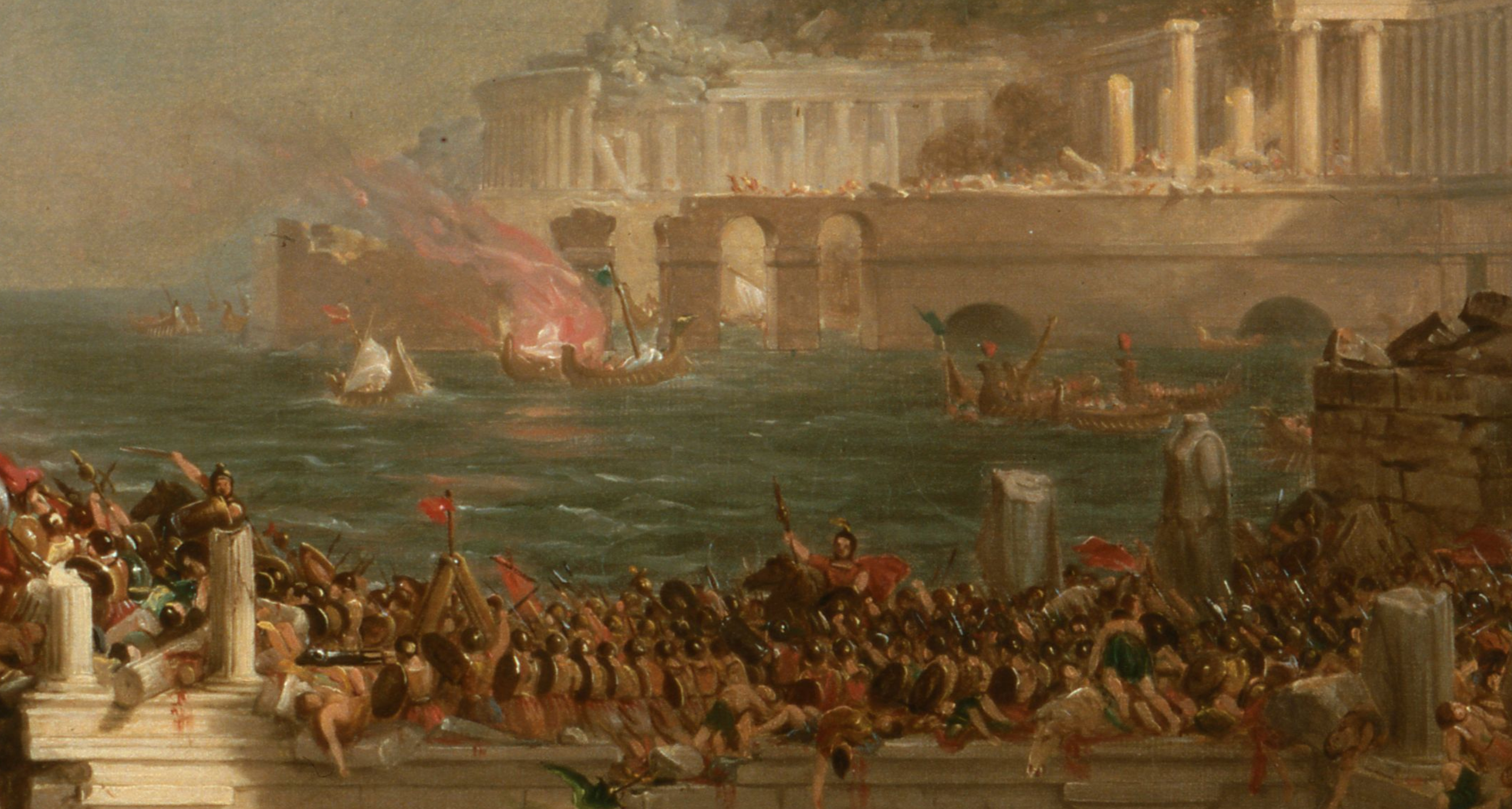
plundering the whole city and destroying the most of the Romans,
they moved on. At that time they say that the Emperor Honorius
in Ravenna received the message from one of the eunuchs, evidently
a keeper of the poultry, that Rome had perished. And he cried
out and said, "And yet it has just eaten from my hands!"
For he had a very large cock, Rome by name; and the eunuch comprehending
his words said that it was the city of Rome which had perished
at the hands of Alaric, and the emperor with a sigh of relief
answered quickly: "But I, my good fellow, thought that my
fowl Rome had perished." So great, they say, was the folly
with which this emperor was possessed.
But some say that Rome was not captured in this way by Alaric,
but that Proba, a woman of very unusual eminence in wealth and
in fame among the Roman senatorial class, felt pity for the Romans
who were being destroyed by hunger and the other suffering they
endured; for they were already even tasting each other's flesh;
and seeing that every good hope had left them, since both the
river and the harbour were held by the enemy, she commanded her
domestics, they say, to open the gates by night.
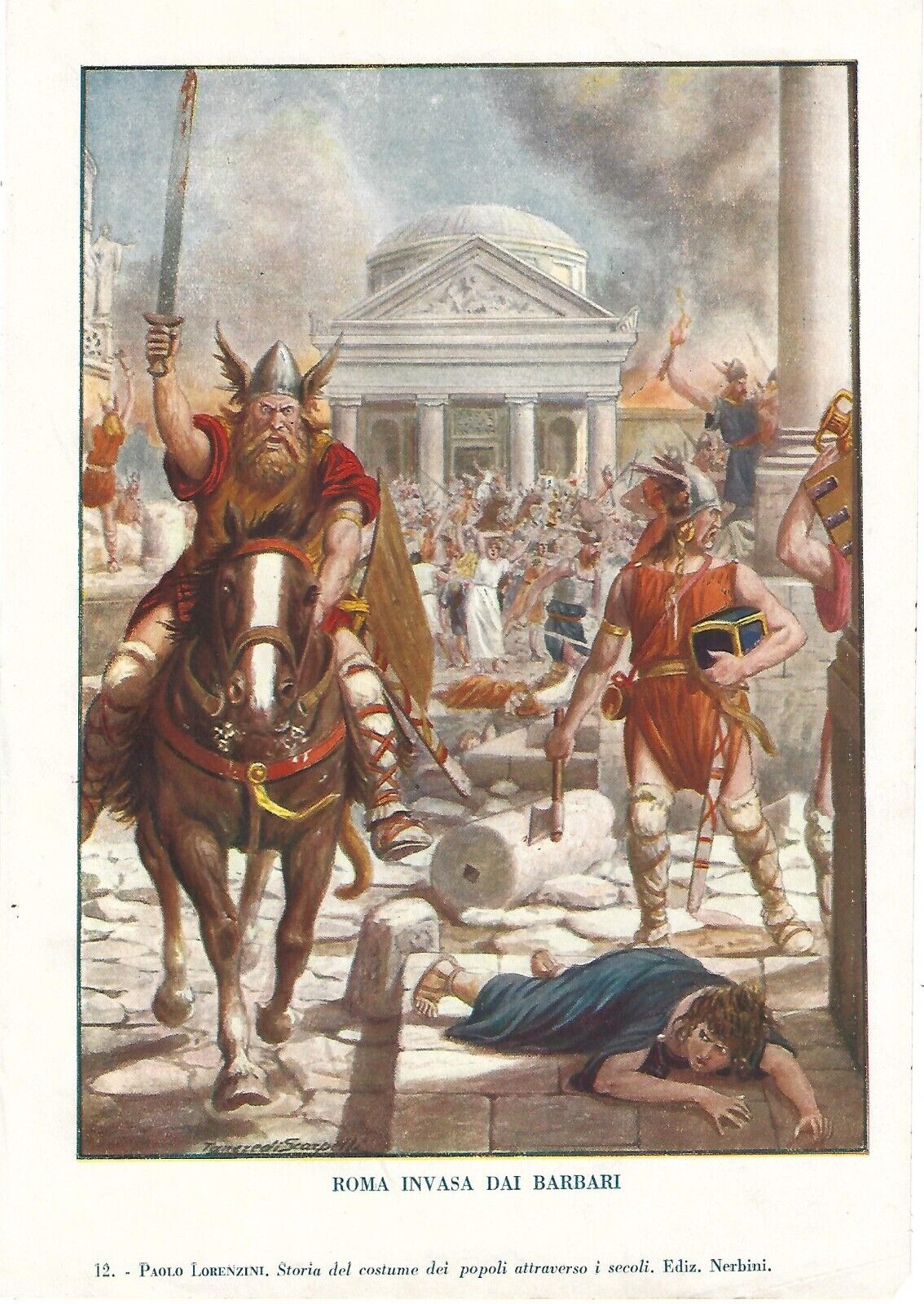
Now
when Alaric was about to depart from Rome, he declared Attalus,
one of their nobles, emperor of the Romans, investing him with
the diadem and the purple and whatever else pertains to the imperial
dignity. And he did this with the intention of removing Honorius
from his throne and of giving over the whole power in the West
to Attalus. With such a purpose, then, both Attalus and Alaric
were going with a great army against Ravenna. But this Attalus
was neither able to think wisely himself, nor to be persuaded
by one who had wisdom to offer. So while Alaric did not by any
means approve the plan, Attalus sent commanders to Libya without
an army. Thus, then, were these things going on.
[---]
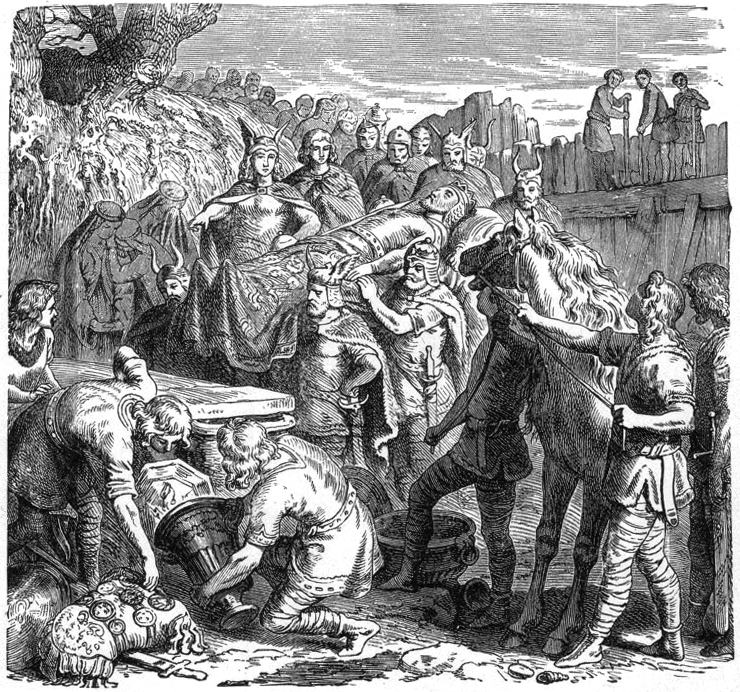
"The burial of Alaric in the bed of
Busentinus"
, and Constantinus, defeated in battle,
died with his sons.
...
Efter dessa två plundringar av Rom, förflyter
45 år, och sedan kommer vandalerna, från Kartago,
och plundrar Rom ännu en gång (år 455):
V
And Gizeric, for no
other reason than that he suspected that much money would come
to him, set sail for Italy with a great fleet. And going up to
Rome, since no one stood in his way, he took possession of the
palace. Now while Maximus was trying to flee, the Romans threw
stones at him and killed him, and they cut off his head and each
of his other members and divided them among themselves.
But
Gizeric took Eudoxia captive, together with Eudocia and Placidia,
the children of herself and Valentinian, and
placing an exceedingly
great amount of gold and other imperial treasure in his ships
sailed to Carthage, having spared neither bronze nor anything
else whatsoever in the palace. He plundered also the temple of
Jupiter Capitolinus, and tore off half of the roof. Now this roof
was of bronze of the finest quality, and since gold was laid over
it exceedingly thick, it shone as a magnificent and wonderful
spectacle. But of the ships with Gizeric, one, which was bearing
the statues, was lost, they say, but with all the others the Vandals
reached port in the harbour of Carthage.
[---]
I bok 5 skriver Prokopius igen om denna sak, och nämner
här fler detaljer:
507 a.d.
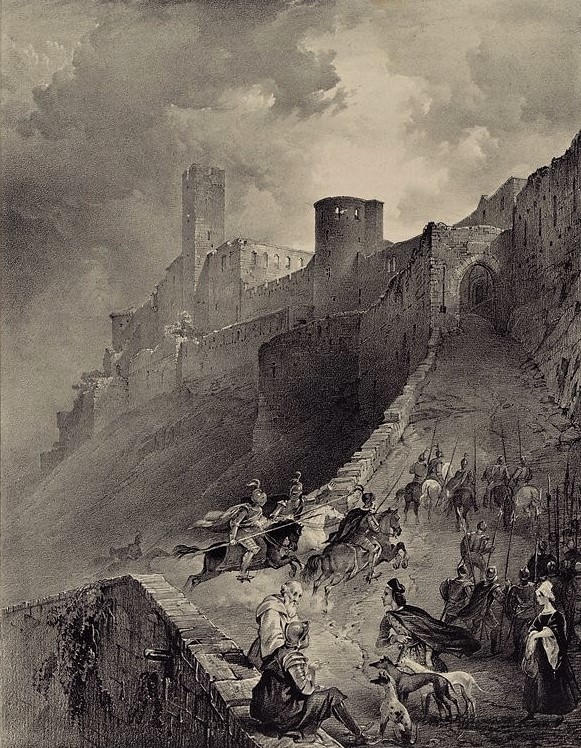
Det medeltida Carcassonne, som det såg
ut 1834, innan senare restaureringar
Then
they
[frankerna, här kallade germaner] took possession
of the greater part of Gaul and held it;
and they laid siege
to Carcasiana with great enthusiasm, because they had learned
that the royal treasure was there, which Alaric the elder in earlier
times had taken as booty when he captured Rome.[57] Among these
were also the treasures of Solomon, the king of the Hebrews, a
most noteworthy sight. For the most of them were adorned with
emeralds; and they had been taken from Jerusalem by the Romans
in ancient times.[58] Then the survivors of the Visigoths
declared Giselic, an illegitimate son of Alaric, ruler over them,
Amalaric, the son of Theoderic's daughter, being still a very
young child. And afterwards, when Theoderic had come with the
army of the Goths, the Germans became afraid and broke up the
siege. So they retired from there and took possession of the part
of Gaul beyond the Rhone River as far as the [131]ocean. And Theoderic,
being unable to drive them out from there, allowed them to hold
this territory, but he himself recovered the rest of Gaul. Then,
after Giselic had been put out of the way, he conferred the rule
of the Visigoths upon his grandson Amalaric, for whom, since he
was still a child, he himself acted as regent. And taking all
the money which lay in the city of Carcasiana, he marched quickly
back to Ravenna; furthermore, he continued to send commanders
and armies into Gaul and Spain, thus holding the real power of
the government himself, and by way of providing that he should
hold it securely and permanently, he ordained that the rulers
of those countries should bring tribute to him. And though he
received this every year, in order not to give the appearance
of being greedy for money he sent it as an annual gift to the
army of the Goths and Visigoths. And as a result of this, the
Goths and Visigoths, as time went on, ruled as they were by one
man and holding the same land, betrothed their children to one
another and thus joined the two races in kinship.
[57]Cf. Book III. ii. 14-24.
[58]At the capture of Jerusalem by Titus in 70 a.d. The treasures
here mentioned were removed from Rome in 410 a.d. The remainder
of the Jewish treasure formed part of the spoil of Gizeric, the
Vandal. Cf. Book IV. ix. 5 and note.
Det framgår alltså här att Alarik, som
den förste att plundra Rom, bara hade lämnat kvar vissa
av föremålen från templet. Skall vi tro att han
lämnade kvar det dyrbaraste av alltsammans?
(Säger detta för att det finns en allmänt utbredd
uppfattning att det var vandalerna som tog Menoran och de andra
tempelföremålen från Rom. Som synes nedan tog
de säkert vissa av dessa föremål, men i så
fall bara vad som lämnats kvar av Alarik och Ataulf. Som
sagt, varför skulle Visigoterna ha lämnat kvar de dyrbaraste
föremålen av tempelskatten?)
___
Så, åren 532-533 händer detta:
IX
Belisarius,
upon reaching Byzantium with Gelimer and the Vandals, was counted
worthy to receive such honours, as in former times were assigned
to those generals of the Romans who had won the greatest and most
noteworthy victories. And a period of about six hundred years
had now passed since anyone had attained these honours,[26] except,
indeed, Titus and Trajan, and such other emperors as had led armies
against some barbarian nation and had been victorious. For he
displayed the spoils and slaves from the war in the midst of the
city and led a procession which the Romans call a "triumph,"
not, however, in the ancient manner, but going on foot from his
own house to the hippodrome and then again from the barriers until
he reached the place where the imperial throne is. And there was
booty,—first of all, whatever articles are wont to be set
apart for the royal service,—thrones of gold and carriages
in which it is customary for a king's consort to ride, and much
jewelry made of precious stones, and golden drinking cups, and
all the other things which are useful for the royal table. And
there was also silver weighing many thousands of talents and all
the royal treasure amounting to an exceedingly great sum
(for
Gizeric had despoiled the Palatium in Rome, as has been said in
the preceding narrative),[28] and among these were the treasures
of the Jews, which Titus, the son of Vespasian, together with
certain others, had brought to Rome after the capture of Jerusalem.
And one of the Jews, seeing these things, approached one of those
known to the emperor and said: "These treasures I think it
inexpedient to carry into the palace in Byzantium. Indeed, it
is not possible for them to be elsewhere than in the place where
Solomon, the king of the Jews, formerly placed them. For it is
because of these that Gizeric captured the palace of the Romans,
and that now the Roman army has captured that the Vandals."
When this had been brought to the ears of the Emperor, he became
afraid and quickly sent everything to the sanctuaries of the Christians
in Jerusalem.
[28] Cf. Book III. v. 3; that was in A.D. 455.
The spoliation of Jerusalem by Titus had taken place in A.D. 70.
(PROCOPIUS - HISTORY OF THE WARS, BOOKS III AND IV)
Prokopius säger inget detaljerat om Alariks intagande
av Rom, dvs angående vad som plundrades, bara att han och
hans armé plundrade Rom, och sedan begav sig iväg.
(kap. II)
___
Wikipedia (som synes - och anmärkt
- nedan, inte helt tillförlitligt):
Rome (70-455 CE)
The
menorah from the Second Temple was carried to Rome after the Roman
conquest of Jerusalem in 70 AD during the First Jewish–Roman
War. The fate of the menorah used in the Second Temple is recorded
by Josephus, who states that it was brought to Rome and carried
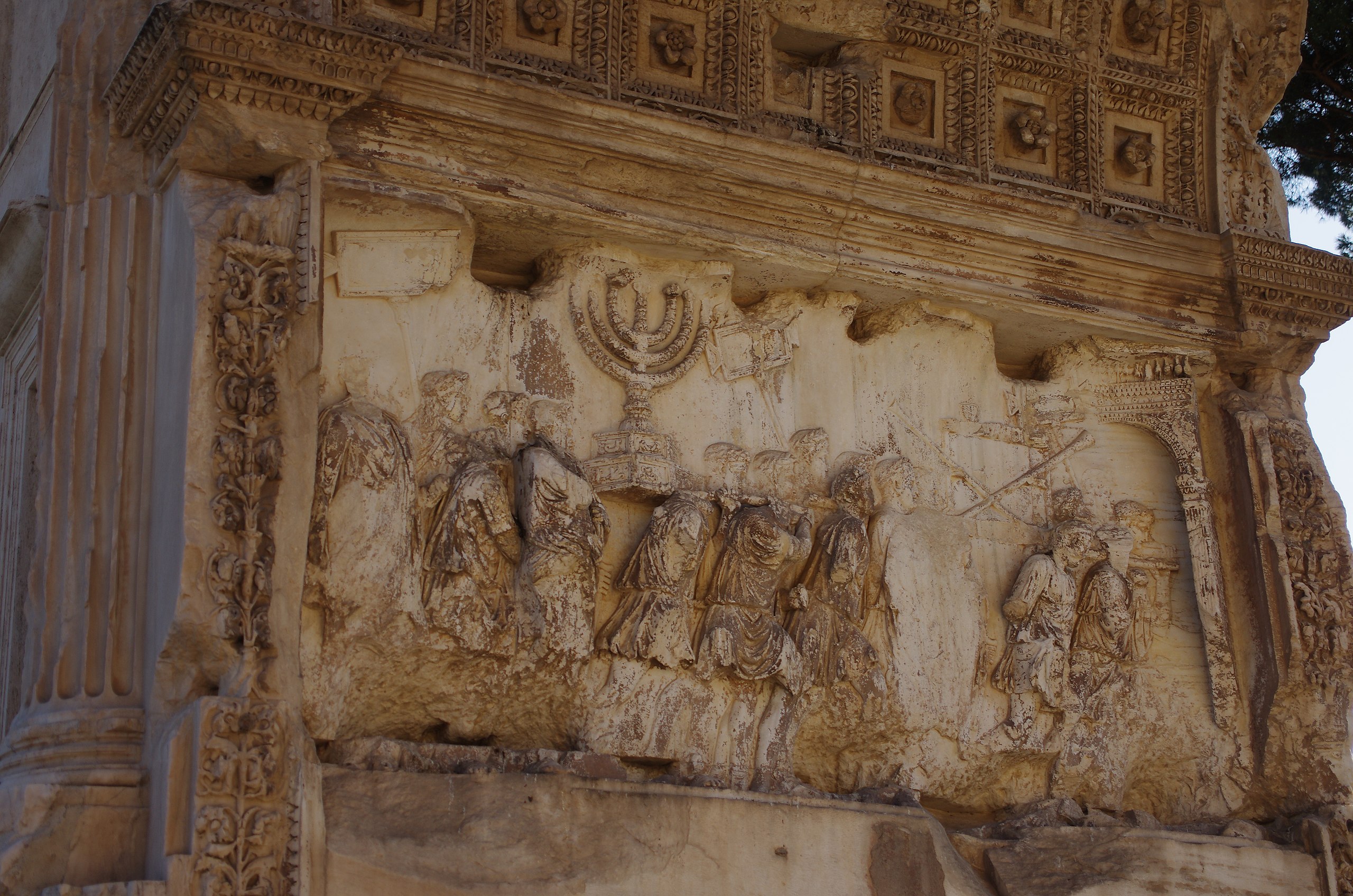
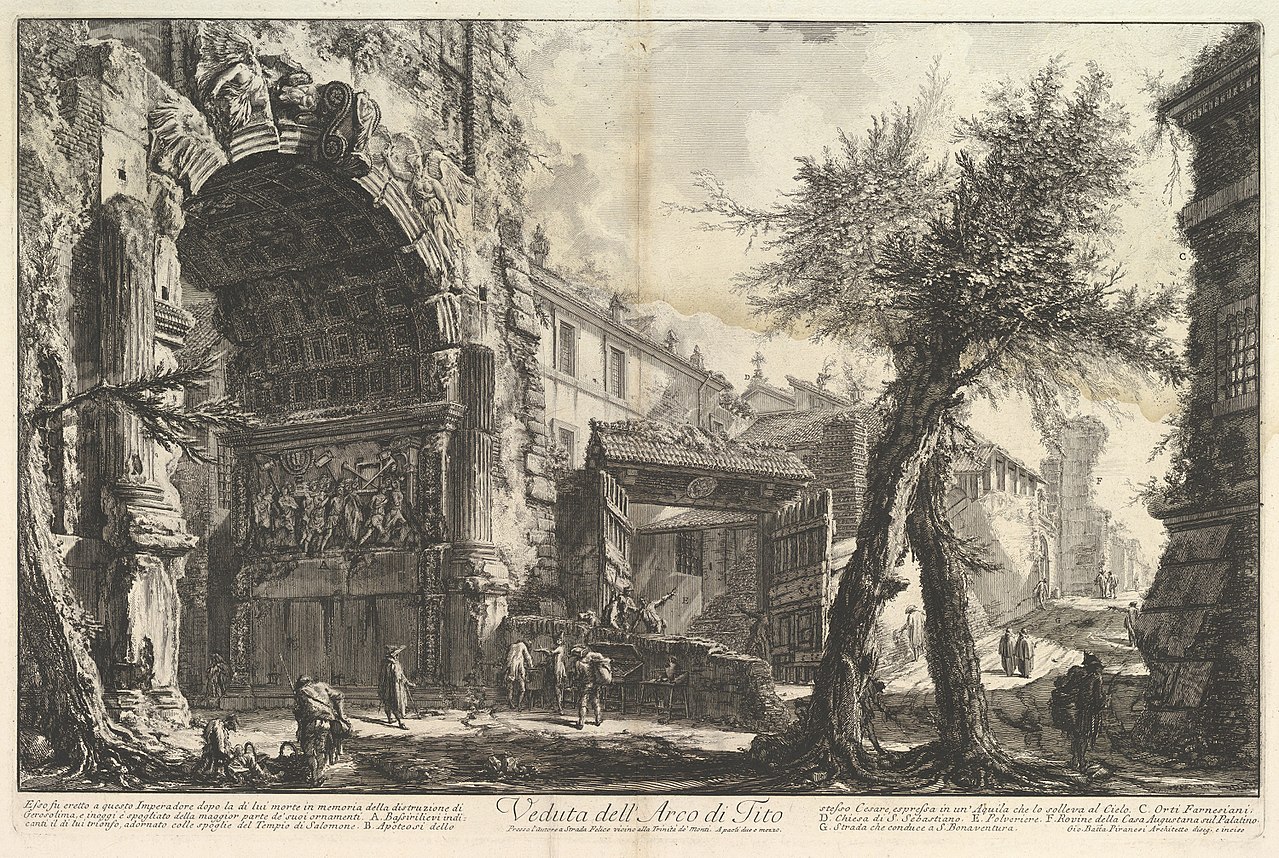
along during the triumph of Vespasian and Titus. The bas relief
on the Arch of Titus in Rome depicts a scene of Roman soldiers
carrying away the spoils of the Second Temple, in particular,
the seven-branched menorah, or candelabrum. For centuries, the
Menorah was displayed as a war trophy at the Temple of Peace in
Rome, a Roman temple paid for with spoils taken from the conquered
city of Jerusalem. It was still there when the city was conquered
by Vandals in 455.[18]
Såvitt jag har hittat, detta sägs aldrig, det
är bara ett antagande, det talas bara om skatterna från
templet, som om Alarik skulle ha lämnat kvar alltsammans,
när det sägs uttryckligen att han plundrade hela Rom.
[---] It could have been destroyed when Jerusalem was pillaged
by the Persians in 614.
In
the Avot of Rabbi Natan (Ch. 41 Ps. 12), one of the minor tractates
of the Jewish Babylonian Talmud, there is a listing of Jewish
treasures, which according to Jewish oral tradition are still
in Rome, as they have been for centuries.
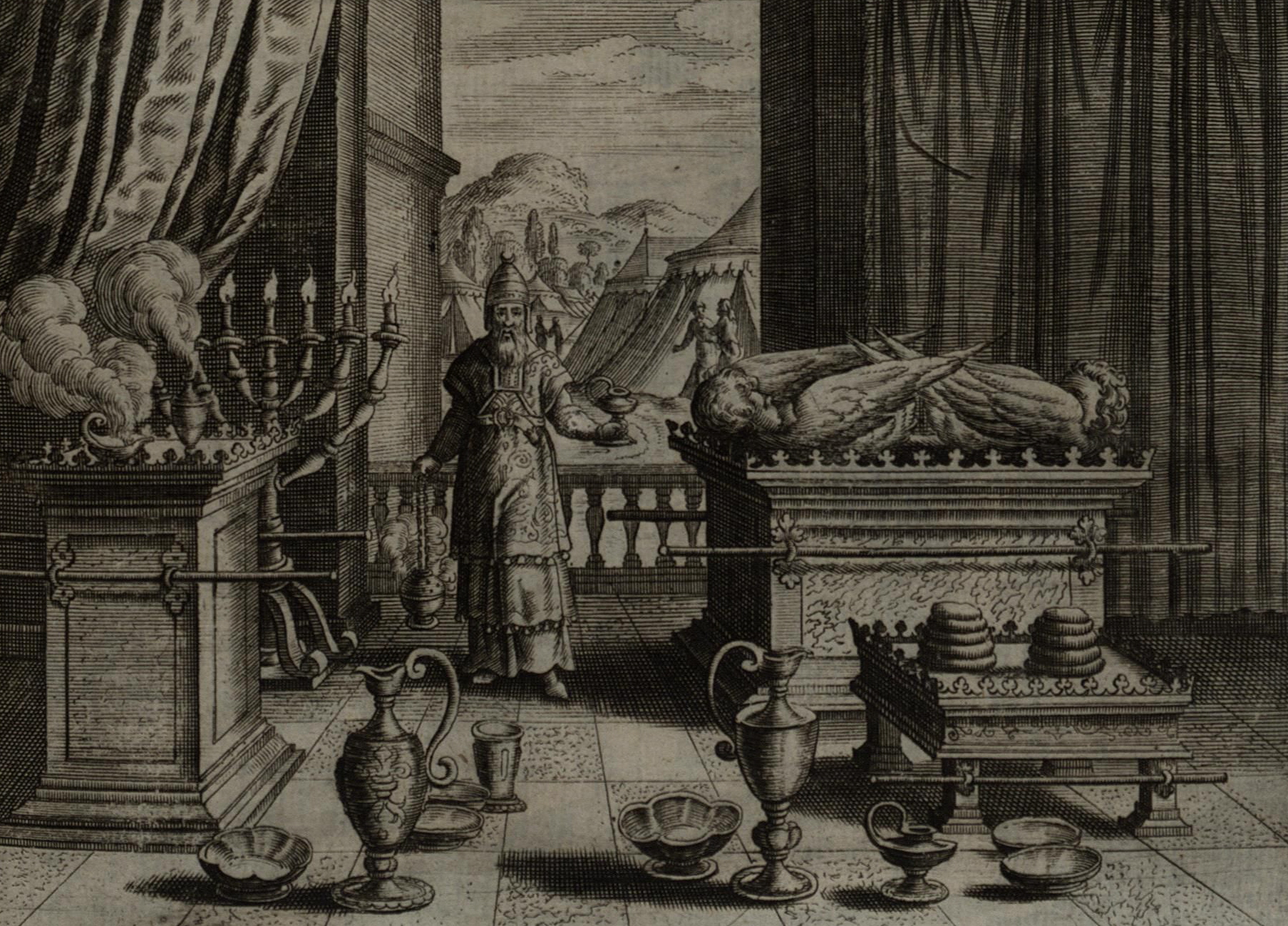
"The objects that were crafted, and then hidden away
are these: the tent of meeting and the vessels contained therein,
the ark and the broken tablets, the container of manna, and the
flask of annointing oil, the stick of Aaron and its almonds and
flowers, the priestly garments, and the garments of the annointed
[high] priest.
But, the spice-grinder of the family of Avtinas [used to
make the unique incense in the Temple], the [golden] table [of
the showbread], the menorah, the [ornate] curtain [that partitioned
the holy from the holy-of-holies], and the [golden] head-plate
[of the high-priest] are still sitting in Rome." –
Avoth D'rabi Natan (Ch. 41 Ps. 12)
___
Så här skrev Gibbon om
saken:
Since
the abolition of Paganism, the Capitol had been violated and abandoned;
yet the statues of the gods and heroes were still respected, and
the curious roof of gilt bronze was reserved for the rapacious
hands of Genseric. (7)
The holy instruments of the Jewish worship,(8)
the gold table, and the gold candlestick with seven branches,
originally framed according to the particular instructions of
God himself, and which were placed in the sanctuary of his temple,
had been ostentatiously displayed to the Roman people in the triumph
of Titus. They were afterwards deposited in the temple of Peace;
and at the end of four hundred years, the spoils of Jerusalem
were transferred from Rome to Carthage, by a barbarian who derived
his origin from the shores of the Baltic. These ancient monuments
might attract the notice of curiosity as well as of avarice. But
the Christian churches, enriched and adorned by the prevailing
superstition of the times, afforded more plentiful materials for
sacrilege; and the pious liberality of pope Leo, who melted six
silver vases, the gift of Constantine, each of an hundred pounds
weight, is an evidence of the damage which he attempted to repair.
In the forty-five years that had elapsed since the Gothic invasion,
the pomp and luxury of Rome were in some measure restored; and
it was difficult either to escape, or to satisfy, the avarice
of a conqueror who possessed leisure to collect, and ships to
transport, the wealth of the capital. The Imperial ornaments of
the palace, the magnificent furniture and wardrobe, the sideboards
of massy plate, were accumulated with disorderly rapine: the gold
and silver amounted to several thousand talents; yet even the
brass and copper were laboriously removed. Eudoxia herself, who
advanced to meet her friend and deliverer, soon bewailed the imprudence
of her own conduct. She was rudely stripped of her jewels; and
the unfortunate empress, with her two daughters, the only surviving
remains of the great Theodosius, was compelled, as a captive,
to follow the haughty Vandal, who immediately hoisted sail, and
returned with a prosperous navigation to the port of Carthage.(9)
___
Tidslinje:
- 70 eKr: Titus för tempelskatten till Rom.
Därefter förevisades skatten i Fredens Tempel i Rom
- År 192 drabbades templet av en brand, och vissa föremål
förstördes, andra räddades. Föremålen
från Jerusalem nämns inte, kanske för att romarna
ansåg deras egna föremål viktigare. Menoran
började dock avbildas i konst runt om i Europa vid den här
tiden, så det är troligt att den fanns kvar i Fredens
tempel.
- 408, två år före Roms intagande, skakas
Fredens Tempel av jordbävningar under sju dagar.
- 410 eKr kommer Alarik och plundrar Rom, enligt Prokopius
får han med sig av den judiska tempelskatten.
- Något år senare kommer Ataulf, Alriks efterträdare,
och plundrar det som Alarik inte fått med sig. Han och
visigoterna drar sedan till Gallien och bosätter sig där.
- 455 kommer vandalen Geiserik från Kartago och plundrar
Rom igen, den här gången riktigt grundligt, de t.o.m
bryter loss koppartak från något tempel.
- 507 angriper frankerna visigoternas stad Carcassonne, men
lyckas inte inta den. Anledningen är att de fått veta
att (delar av) tempelskatten skall finnas där.
I samband med detta kommer Teodorik från Ravenna och jagar
bort frankerna, och tar med sig "pengar" från
Carcassonne till Ravenna.
- 532-33 angriper Belisarius vandalerna och tar med sig deras
skatter till Konstantinopel, varifrån det som återstår
av tempelskatten skickas till de kristna i Jerusalem.
Därefter är det i stort sett tyst om tempelskatten,
vilket antyder att den blivit gömd någonstans. Frågan
är var.
Judarna tror att den är i Rom (tillbaka efter plundringarna,
eller att den aldrig lämnade staden).
Många tror att den är gömd i någon grotta
i Carcassonne.
Andra tror att den hittades av tempelriddarna och fördes
av dem till Skottland, eller Amerika.
Ljusstaken och "dess plats" ("tou topou")
idag
Kanske
finns det ett helt annat sätt att spåra tempelskatten,
och särskilt menoran. Menoran hade vissa "egenskaper",
dvs Gud använde den på ett speciellt sätt, den
lyste bl.a av sig själv, påstods det, utan bränsle,
och sedan slocknade den i samband med Jesu korsfästelse,
eller om det var någon annan avgörande händelse
i Israels historia, kanske strax innan templets förstörelse,
jag minns inte riktigt nu. Hur som helst, så länge
den lyste, lyste också Guds ljus över Israel och dess
folk. Och Jesus använde detta, som en andlig allegori, när
han sade till en av församlingarna i Mindre Asien, att om
de inte gjorde bättring, skulle han komma över dem och
flytta deras ljusstake. Dvs så länge församlingen
där var trogen Gud, så länge lyste ljuset från
Gud och himlen över dem. Så om den judiska menoran
flyttades, och först slocknade den alltså, till Rom,
vid tiden för templets förstörelse och den judiska
nationens undergång, då har vi en ledtråd här.
Vad hände sedan menoran flyttats till Rom? Jo, då började
det lysa där, den kristna församlingen där började
få mer inflytande, andligt, än vad församlingarna
i Israel hade (Jerusalemförsamlingen hade redan lämnat
Israel när templet förstördes), så nu var
ljusstaken i Rom, och den kristna tron började breda ut sig
i det romerska riket, bland de sydeuropeiska folken.
Så på 400-talet, när församlingen i Rom
hade gjort det fatala misstaget att bli statskyrka åt Konstantin,
och dessutom var på fallrepet sedan en tid, andligt, och
mer eller mindre blivit avfällig, dvs lampan hade slocknat,
då hände det följande: Folk från den norra
delen av Europa började översvämma det romerska
riket, och 410 kom Alarik med sina visigoter och intog Rom, och
menoran flyttades igen, bort från Rom denna gång,
och till Visigoternas rike i nuv. Frankrike. Och detta motsvarar
vad som skedde parallellt andligt, nu började kristendomen
spridas norrut, och många väckelserörelser, fria
från Roms inflytande uppstod, i de germanska länderna.
Lampan lyste nu alltså längre norrut, därför
att den fysiska menoran fanns där, inte pga menoran själv
givetvis, men pga att den användes av Gud som ett parallellverkande,
profetiskt objekt. (Eller som ett yttre tecken på vad som
skedde andligt.)
Så var finns den idag? Ja, var finns det starkaste ljuset,
idag? Efter att väckelserörelserna gått genom
den germanska världen, övergick det andliga skeendet
och initiativet, till de brittiska öarna. Så kan menoran
ha flyttats till England, och kanske Skottland, som vissa spekulerar?
Och sedan vidare till den kontinent, som sedan 1700-1800-talet,
haft det starkaste andliga ljuset - dvs USA? Det finns vissa saker
som tyder på att så kan ha skett, men inte med den
avsikt "förflyttarna" hade, men Gud i sin vishet
och sitt förutseende lät det ske, för att han visste
att han i slutändan skulle få SIN vilja igenom, ändå.
Menoran och kanske mer av den judiska tempelskatten, skulle
alltså befinna sig i Amerika? Det finns mycket spekulationer
om just detta, bl.a annat spekulerar man om skatten kan befinna
sig, nedgrävd, på Oak Island, i Nova Scotia, i Kanada,
nära gränsen till USA. Den kan också ha flyttats
därifrån till en plats kallad Fredens Trädgård,
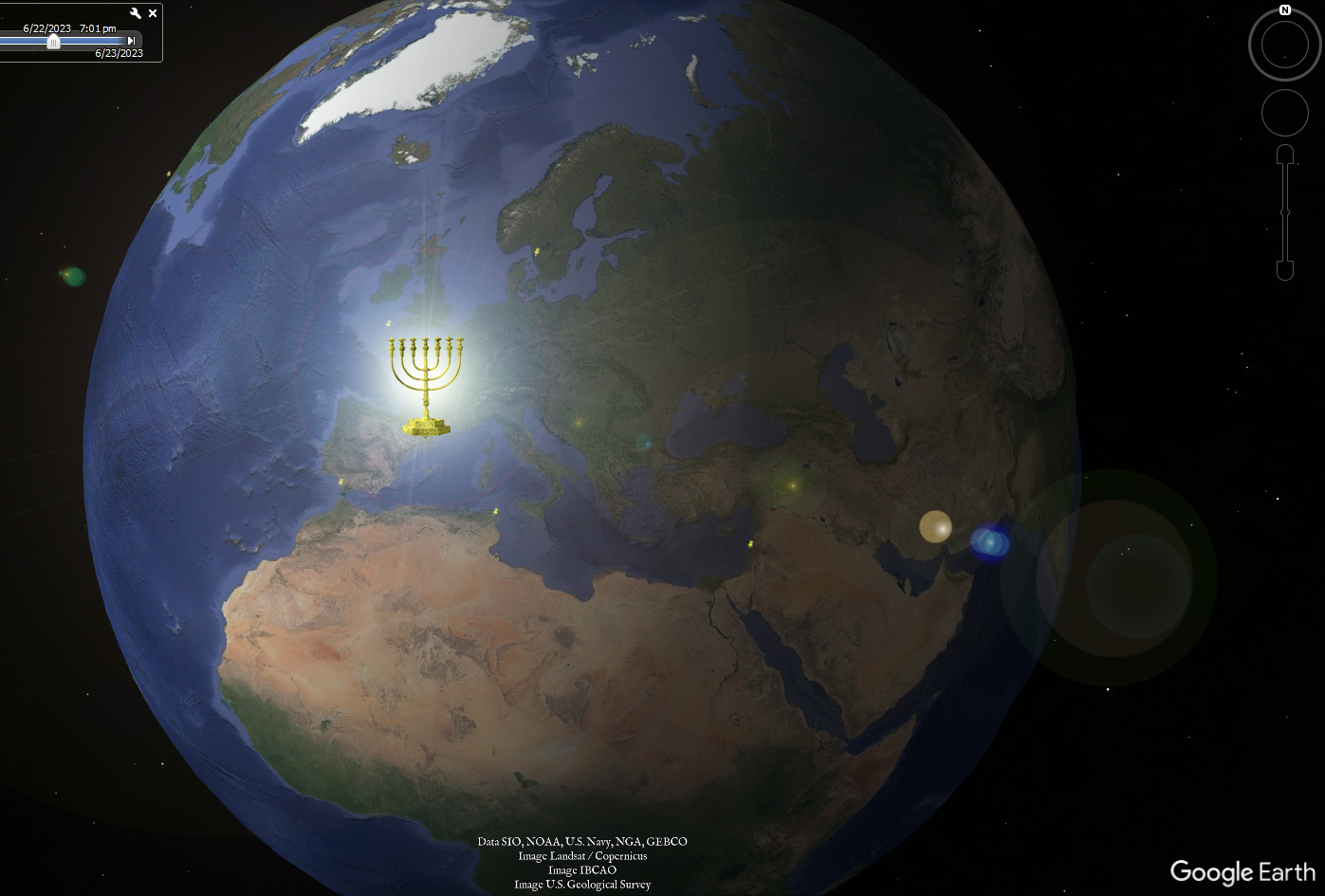
precis vid gränsen mellan USA och Kanada. Det intressanta
med denna plats, är att om det dras en linje på kartan,
från Fredens tempel i Rom, längs med den gata där
det fanns och där de verkligt betydelsefulla palatsen och
templen fanns, i Rom, så går denna linje tvärs
över jordklotet, och kommer till Fredens Trädgård,
i USA. Och det finns kopplingar mellan dem som byggde denna plats
och frimureriet, och Sir Francis Drake, tempelriddarna, m.m.,
som antyder att dessa mer eller mindre hemliga grupper haft kännedom
om tempelskatten, ända tillbaka sedan Alariks dagar. Och
som sagt, om än deras syften kanhända varit av det dunklare
slaget, jag säger kanhända, för man vet inte vad
som rör sig i deras hjärtan riktigt, och Gud säger
han kan vända på konungarnas hjärtan som vattenbäckar,
så har alltså Guds vilja skett, precis som t.ex skedde
när Josefs bröder sålde Josef som slav, och räddade
därmed hela sin släkt, från svältdöden,
utan att själva veta om det eller förstå det.
Om Gud använde romarna för att föra menoran
till Rom, och ljuset från himlen började sprida sig
där, så kan han givetvis också ha använt
sig av hemliga ordnar, för att föra ljusstaken vidare,
dem ovetandes om vad Gud hade för planer. Kan de ha hemligheter,
så kan Gud ha det också. Det såg vi ju bl.a
i det att fienden blev lurad att korsfästa Jesus, Gud för
alltså sin vilja fram, och använder både vänner
och fiender, för att hans goda vilja skall ske, och bli fullbordad,
till slut.
Kanske står menoran och lyser någonstans, i något
källarvalv, fortfarande, nu på den amerikanska kontinenten.
________
Bara
Jesus
frälsar oss från
vredesdomen